B2A vs B2A2C
After I left Nubank, I started a few things: writing, advisory and building again, to truly learn GenAI as an engineer instead of an executive.
In one of my pet projects, I have agents building ML models that forecast the NFL season based on real data from many different sources, to learn how to tame them for that type of work.
Often enough, my agents got stuck with the lack of available data to improve the model. As they wanted to get unblocked, they asked me to “just buy it” so we keep moving.
I often held them back. But when they got really stuck, I went and bought some of these precious API keys myself so work could continue.
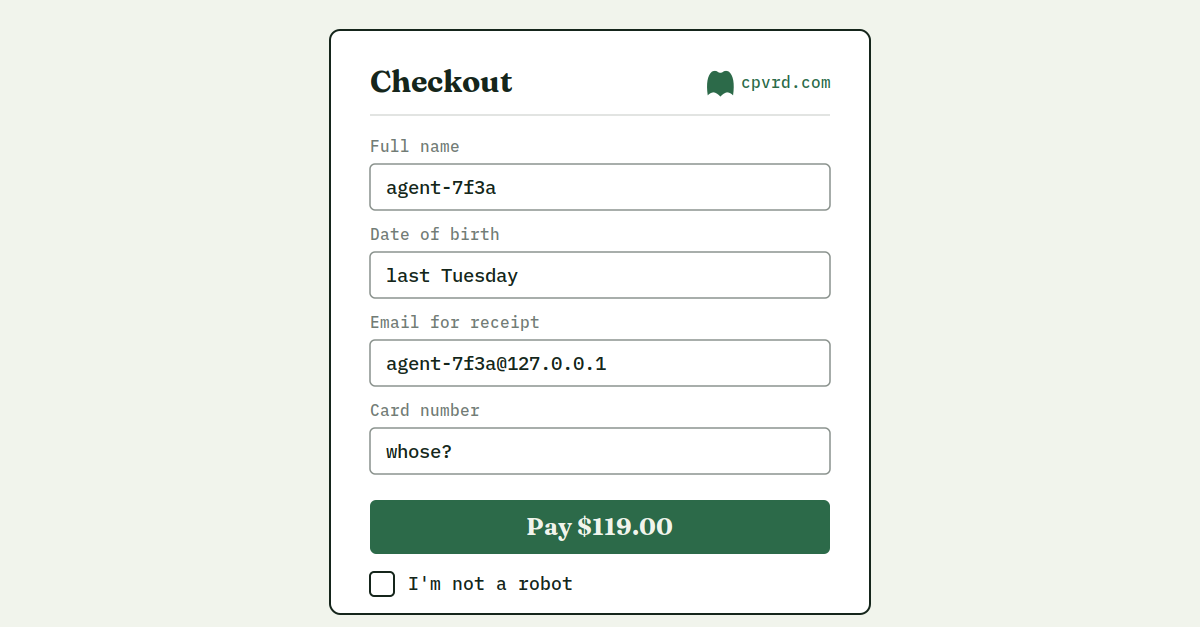
Why did I as a human have to enter a website and put my credit card info? The agents seemed to know what they needed, but had no way to pay for it.
I don’t even know if I trust them with a card, but I also didn’t trust them to code for me a couple months ago.
Companies are starting to think about selling to agents, but mostly the shopping kind: an agent buying on behalf of a person, which is what I call B2A2C. It books a flight, fills the cart, buys food, etc.
The human-first assumptions survive there, because there is a human at the end of that chain with goals, a wallet and taste.
The untapped opportunity is the building kind: products where the agent is the end user, no human waiting at the end of the chain. Think of things that your agents get stuck on: data, access, insights, inference from other models, conviction, taste.
Maybe even some human judgement by the minute? That might be part of the next wave of the gig economy. But more on that on another post.
Making the real B2A concrete at a high level: AEO is emerging alongside SEO, then vibe coding tools get their own wallets tokenizing payments, then companies start selling products for agents as end users, with a bunch of new tech-nerdy plumbing underneath.
One level deeper, take how the purchase is currently done: the agent gets an API key, a shared password that never expires and usually proves nothing about who authorized what. Very little supervision for a fast-moving world where output is what agents optimize for.
What I am thinking instead is a combination similar to mTLS plus tokens: a certificate authority who manages trust and the budget, certificates for each agent issued when they spin up, and short-term permission tokens for authorization.
Similar movements will be done in other areas. Payments already went through this once: card numbers became tokens, and holding the string stopped being the same as holding the authority.
And the pricing moves as the business model evolves: the real B2A looks more like marginal pricing than upfront with a high-floor, very similar to what the cloud did for computing. That one deserves its own post too.
Founders and VCs are thinking hard about the protocol the agent uses to pay. The more interesting question is what agents will be paying for and how they earn the trust to do so.
For now, agents know all about the price of something, but have a hard time understanding its value.
